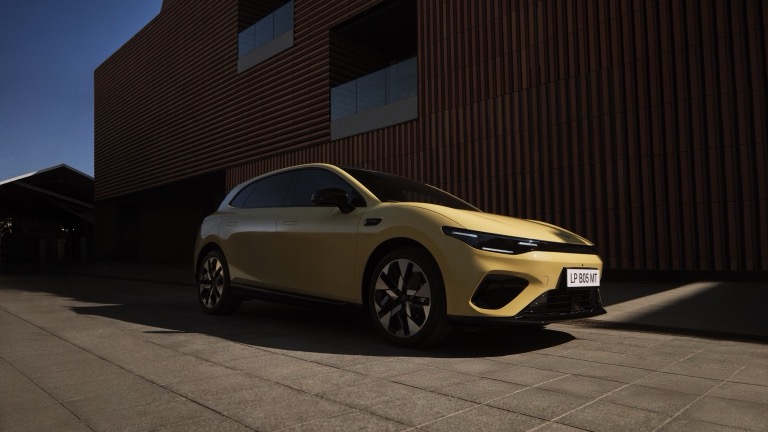
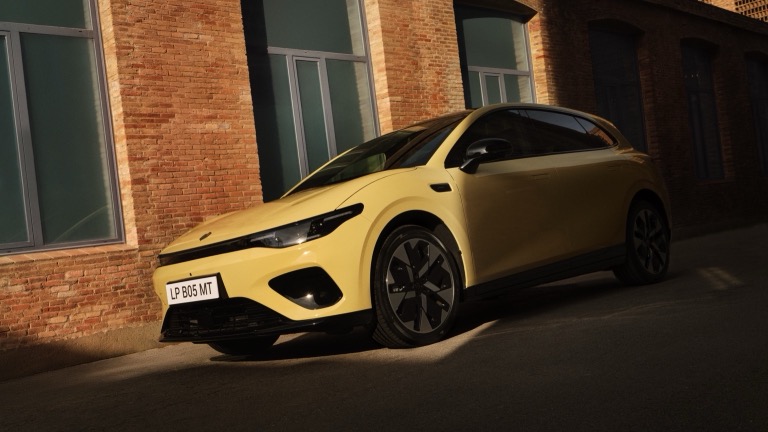
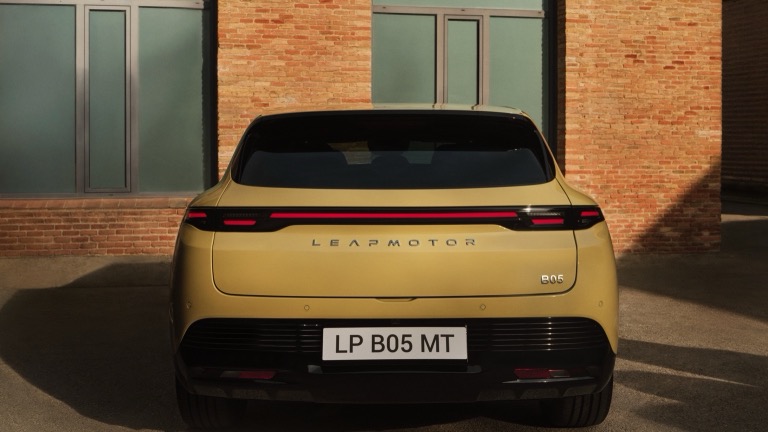
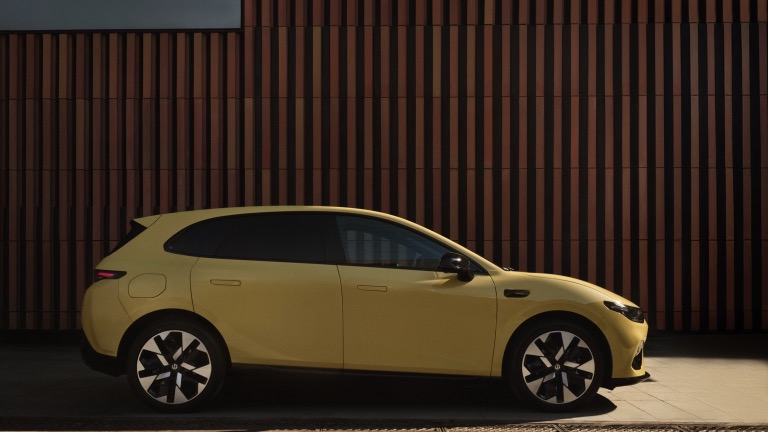
Price shown is an estimated On The Road Price: it includes VAT, first year VED, vehicle first registration fee, number plates and delivery. Lease estimate is based on a BCH calculation excluding VAT, 6+35 months payment profile, 10,000 miles per annum, excluding optional maintenance package. For comparison only, actual lease offers can differ significantly from the indication shown.
Real Range Estimation between 140 - 295 mi
City - Cold Weather *
195 mi
Highway - Cold Weather *
140 mi
Combined - Cold Weather *
165 mi
City - Mild Weather *
295 mi
Highway - Mild Weather *
185 mi
Combined - Mild Weather *
230 mi
Indication of real-world range in several situations. Cold weather: 'worst-case' based on -10°C and use of heating. Mild weather: 'best-case' based on 23°C and no use of A/C. For 'Highway' figures a constant speed of 70 mph is assumed. The actual range will depend on speed, style of driving, weather and route conditions.
The 'long distance suitability' is a 5-star rating that indicates how suitable a vehicle is for long trips. The rating is based on the 1-Stop Range: the total distance a vehicle can cover with one charging stop of 15 minutes.
† This can only be achieved using a 3-phase grid connection. The majority of homes and charge points do not have this connection. In practice charge power will often be 7.4 kW, allowing for a charge time of 8h45m and a charge speed of 23 mph.
(Advertisement)
Performance
Acceleration 0 - 62 mph
7.5 sec
Top Speed
106 mph
Electric Range *
200 mi
Total Power
160 kW (215 hp)
Total Torque
177 lb-ft
Drive
Rear
Bidirectional Charging (V2X / BPT)
Vehicle-to-Load (V2L)
V2L Supported
Yes
Max. Output Power
3.3 kW AC
Exterior Outlet(s)
1 x Type 2 (Adapter)
Interior Outlet(s)
No Data
Vehicle-to-Home (V2H)
V2H via AC Supported
No
Max. Output Power
-
V2H via DC Supported
No
Max. Output Power
-
Vehicle-to-Grid (V2G)
V2G via AC Supported
No
Max. Output Power
-
V2G via DC Supported
No
Max. Output Power
-
Energy Consumption
EVDB Real Range
Range *
200 mi
Vehicle Consumption *
275 Wh/mi
CO2 Emissions
0 g/km
Vehicle Fuel Equivalent *
147 mpg
WLTP Ratings
Range
249 mi
Rated Consumption
254 Wh/mi
Vehicle Consumption
221 Wh/mi
CO2 Emissions
0 g/km
Rated Fuel Equivalent
159 mpg
Vehicle Fuel Equivalent
183 mpg
Rated = official figures as published by manufacturer. Rated consumption and fuel equivalency figures include charging losses. Vehicle = calculated battery energy consumption used by the vehicle for propulsion and on-board systems. NOTE: The fuel equivalency figures are shown in IMPERIAL MPG. Figures in US MPG will differ significantly.
Real Energy Consumption Estimation between 186 - 393 Wh/mi
City - Cold Weather *
282 Wh/mi
Highway - Cold Weather *
393 Wh/mi
Combined - Cold Weather *
333 Wh/mi
City - Mild Weather *
186 Wh/mi
Highway - Mild Weather *
297 Wh/mi
Combined - Mild Weather *
239 Wh/mi
Indication of real-world energy use in several situations. Cold weather: 'worst-case' based on -10°C and use of heating. Mild weather: 'best-case' based on 23°C and no use of A/C. For 'Highway' figures a constant speed of 70 mph is assumed. The energy use will depend on speed, style of driving, climate and route conditions.
* = estimated value. Average energy consumption and range based on moderate drive style and climate. Real-life values may differ significantly. Pricing information might not be actual for some regions. No rights can be derived from the information on this site.
Similar electric vehicles
Volkswagen ID.3 Neo 50 kWh £5,000 more expensive Similar range 7% slower acceleration 7% more energy efficient 14% slower rapid-charging
Citroën ë-C4 £2,650 more expensive 20 mi less range 32% slower acceleration 4% more energy efficient 21% slower rapid-charging
Leapmotor B05 67.1 kWh £3,000 more expensive 35 mi more range 12% faster acceleration 3% less energy efficient 3% faster rapid-charging
Range comparision based on electric range only. Rapid charging comparison based on rapid charge rate. Comparisons can be based on estimates.
Home and Destination Charging (0 -> 100%)
Charging is possible by using a regular wall plug or a charging station. Public charging is always done through a charging station. How fast the EV can charge depends on the charging station (EVSE) used and the maximum charging capacity of the EV. The table below shows all possible options for charging the Leapmotor B05 56.2 kWh. Each option shows how fast the battery can be charged from empty to full.
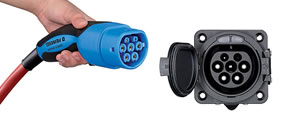
Type 2 (Mennekes - IEC 62196)
Charging Point
Max. Power
Power
Time
Rate
Wall Plug (2.3 kW)
230V / 1x10A
2.3 kW
28h15m
7 mph
1-phase 16A (3.7 kW)
230V / 1x16A
3.7 kW
17h30m
11 mph
1-phase 32A (7.4 kW)
230V / 1x32A
7.4 kW
8h45m
23 mph
3-phase 16A (11 kW)
400V / 3x16A
11 kW
6 hours
33 mph
3-phase 32A (22 kW)
400V / 3x16A
11 kW †
6 hours
33 mph
† = Limited by on-board charger, vehicle cannot charge faster.
(Advertisement)
Rapid Charging (10 -> 80%)
Rapid charging enables longer journeys by adding as much range as possible in the shortest amount of time. Charging power will decrease significantly after 80% state-of-charge has been reached. A typical rapid charge therefore rarely exceeds 80% SoC. The rapid charge rate of an EV depends on the charger used and the maximum charging power the EV can handle. The table below shows all details for rapid charging the Leapmotor B05 56.2 kWh.
Max. Power: maximum power provided by charge point
Avg. Power: average power provided by charge point over a session from 10% to 80%
Time: time needed to charge from 10% to 80%
Rate: average charging speed over a session from 10% to 80%
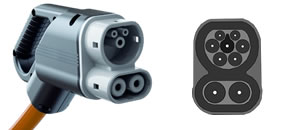
Combined Charging System (CCS Combo 2)
Charging Point
Max. Power
Avg. Power
Time
Rate
CCS (50 kW DC)
50 kW
45 kW †
54 min
150 mph
CCS (150 kW DC)
150 kW
100 kW †
24 min
350 mph
CCS (350 kW DC)
156 kW †
105 kW †
23 min
360 mph
CCS (500 kW DC)
156 kW †
105 kW †
23 min
360 mph
This vehicle does not support Plug & Charge
† = Limited by charging capabilities of vehicle
Plug & Charge: allows for automatic initiation of a charging session at supported CCS charging stations in accordance with ISO 15118.
Actual charging rates may differ from data shown due to factors like outside temperature, state of the battery and driving style.
Leapmotor Claimed Specifications
The table below shows the claimed specifications from the manufacturer for charging the Leapmotor B05 56.2 kWh. The specifications can differ from the table above for a variety of reasons. If real-world charge tests are available, these differences can be signifcant. If no real-world tests are available, the table above will be based on the manufacturer specifications as per the table below.
Max. Power: maximum charge power during charging session
Charge From: battery percentage (% SoC) where charging session is started
Charge To: battery percentage (% SoC) where charging session is ended
Time: time needed for charging session
Leapmotor Claimed Specifications
Max. Power
Charge From
Charge To
Time
156 kW
30 %
80 %
16 min
Long Distance Suitability
How suitable an electric car is for long trips depends not only on the range. How quickly the car can charge plays an almost equally important role. Whether an EV is suitable for long trips depends on the battery capacity, efficiency, and fast charging capability.
To easily compare cars among each other, a benchmark has been established that combines these factors into the total distance a vehicle can cover with one 15-minute charging stop: the '1-Stop Range'. Based on the 1-Stop Range, the 5-star rating is determined. The result of the benchmark is shown in the graph below.
1-Stop Range
+
Based on the driving profile and assumptions below, the 1-Stop Range is determined. The sum of the distance covered in both trip legs is the 1-Stop Range. For vehicles that cannot fast charge, only the distance from the first leg applies.
Driving Profile
Start with a fully charged battery
Drive until 10% battery charge is reached (leg 1)
Fast charge: 15 minutes
Drive until 10% battery charge is reached (leg 2)
Assumptions
Speed, climate, and external conditions based on Real Range Highway
No time required for starting and stopping the charging session
The charger can always supply the charging power requested by the vehicle
The battery is in optimal condition
In practice, it is impossible to exactly meet the driving profile and assumptions. The benchmark is therefore only suitable for comparing vehicles under standardized conditions.
5-Star Rating
+
The 1-Stop Range describes the distance the vehicle can cover with one 15-minute charging stop. To clearly show the impact of temperature, the 1-Stop Range is determined for three weather conditions. These weather conditions are identical to those in the Real Range benchmark. The 1-Stop Range under average conditions determines the number of stars awarded. The star rating provides a quick way to assess whether a car is suitable for long trips compared to other cars.
Assignment of Stars in 2026
0
less than 124 mi (200 km)
1
from 124 mi (200 km) to 202 mi (325 km)
2
from 202 mi (325 km) to 280 mi (450 km)
3
from 280 mi (450 km) to 357 mi (575 km)
4
from 357 mi (575 km) to 435 mi (700 km)
5
more than 435 mi (700 km)
Star ratings are based on thresholds in kilometers. Mile values shown for reference.
Vehicles with a result between these threshold values receive a rating based on a linear scale. Haalf stars are possible.
Revision of Rating
+
Annual Revision
The technology of electric cars is developing rapidly. To ensure that the rating remains relevant, the threshold values are evaluated annually. These threshold values apply to all vehicles, including used vehicles. This makes it possible to compare each car against each other based on the current state of technology.
1-Stop Range
The underlying 1-Stop Range is not revised annually. The total distance that a specific vehicle can cover with one 15-minute charging stop remains the same. If the vehicle itself receives an update that changes the 1-Stop Range, then this change will also be reflected in the rating.
Leapmotor B05 56.2 kWh
2 / 5
0
1
2
3
4
5
165 mi
2h 25min
15 min
100 mi
1h 28min
145 mi
2h 7min
15 min
88 mi
1h 17min
232 mi
(3h 39min)
129 mi
1h 53min
15 min
78 mi
1h 8min
206 mi
(3h 16min)
0 mi
100
200
300
400
Mild Weather
265 mi
1-Stop Range
Average Conditions
232 mi
1-Stop Range
Cold Weather
206 mi
1-Stop Range
All about the Leapmotor B05 56.2 kWh
Pricing
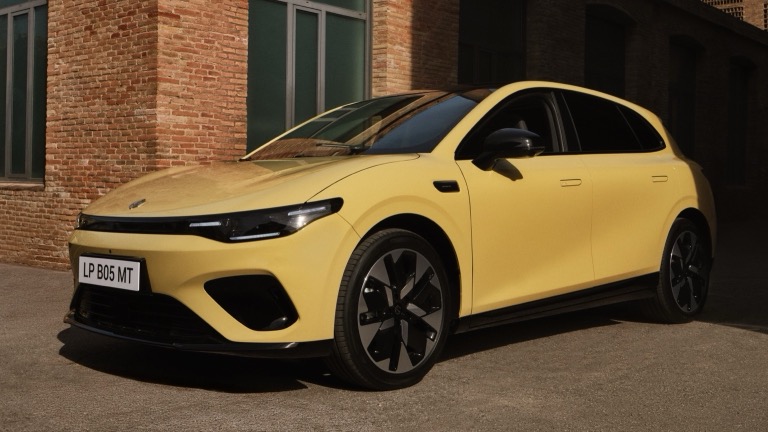
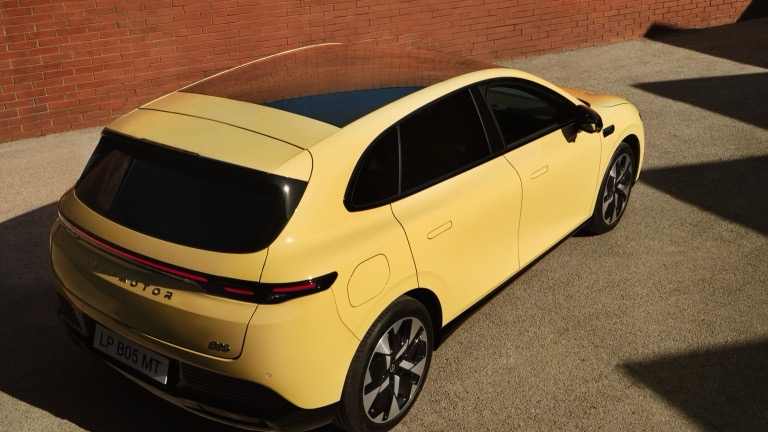
The Leapmotor B05 56.2 kWh has an estimated On The Road Price (OTR) of £25,000. The OTR Price includes VAT, first year of VED, vehicle first registration fee, number plates and delivery.
Drivetrain and Performance
The Leapmotor B05 56.2 kWh is a full electric vehicle (BEV). The maximum power of the Leapmotor B05 56.2 kWh is 160 kW (215 hp). The maximum torque is 177 lb-ft. The Leapmotor B05 56.2 kWh is rear wheel drive and can accelerate from 0 to 62 miles per hour in 7.5 seconds. The top speed is 106 mph.
Battery and Charging
The battery of the Leapmotor B05 56.2 kWh has a total capacity of 56.2 kWh. The usable capacity is 55 kWh (estimate). An estimated range of about 200 miles is achievable on a fully charged battery. The actual range will however depend on several factors including climate, terrain, use of climate control systems and driving style.
For example: sustaining high speeds in cold weather could result in a range of around 140 mi. However, driving at low speeds in mild weather will increase the range to around 295 mi.
Charging is done using a Type 2 connector and the on-board charger has a maximum power of 11 kW. This charges a fully depleted battery back to full in around 6 hours. However, a 3-phase grid connection is needed to achieve this. The majority of homes and charge points currently do not have this connection. In most cases the maximum charging power will be 7.4 kW, allowing for a charge time of 8 hours 45 minutes and a charge rate of 23 mph. Charging the car using a regular wall plug will take around 28 hours 15 minutes.
Rapid charging is possible through a CCS connection. The maximum rapid charge power is 156 kW. The battery can't be charged continuously at this power. In an average rapid charge session the average charge power will be around 105 kW. This charges the battery from 10% to 80% in around 25 minutes. A rapid charge like this will add about 140 miles of range.
Energy Consumption
The estimated combined (motorway and city) energy consumption of the Leapmotor B05 56.2 kWh is about 275 Wh per mile. By comparison, this energy consumption is the equivalent of a fuel consumption of 147 mpg in a traditional petrol car.
The actual energy consumption will depend on several factors including climate, terrain, use of climate control systems and driving style. For example: sustaining high speeds in cold weather could result in an energy use of around 393 Wh per mile. However, driving at low speeds in mild weather will increase the efficiency to about 186 Wh per mile.
CO2 Emission
The Leapmotor B05 56.2 kWh emits no CO2 during driving. This only includes direct emissions from the vehicle itself. The energy needed to charge the battery might have been (partly) generated by the use of fossil fuels. Vehicles with an internal combustion engine will always emit CO2 during driving. Additionally, CO2 is emitted during the production and transport of fossil fuels.
More information from Leapmotor
The link below will open the page of the B05 on the official Leapmotor site.

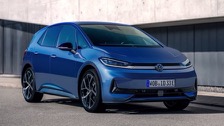 Volkswagen ID.3 Neo 50 kWh
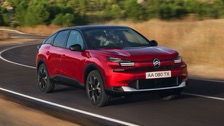 Citroën ë-C4
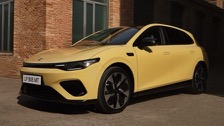 Leapmotor B05 67.1 kWh